
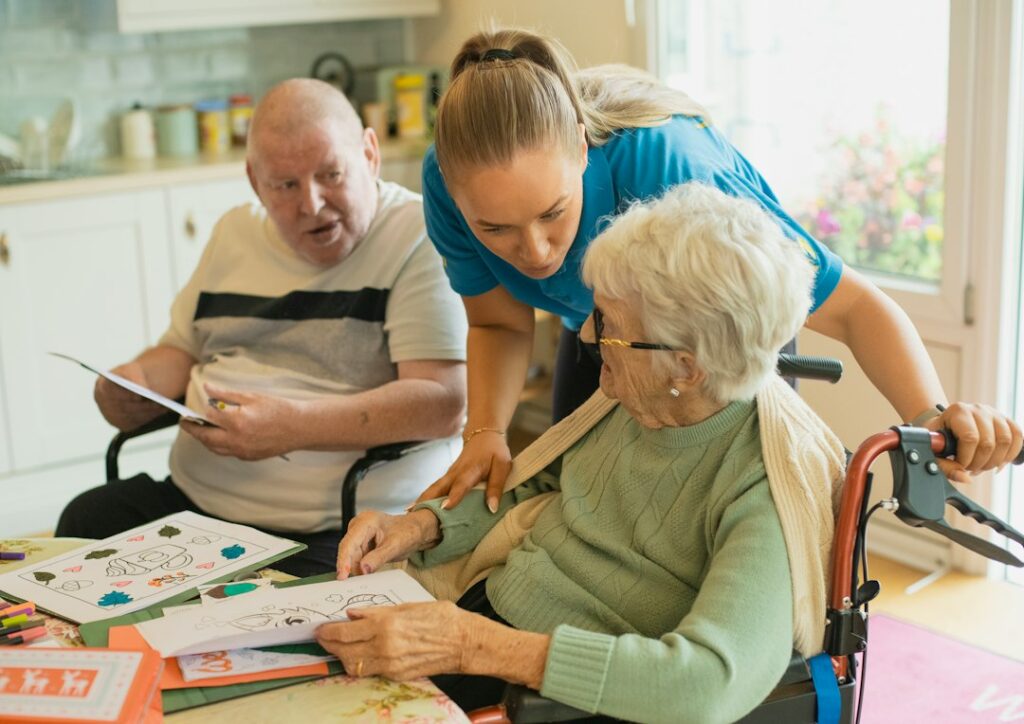
Choosing between assisted living and a nursing home usually depends on one central question: How much daily support and medical care does the person need? Assisted living is generally designed for adults who need help with everyday activities but do not require continuous skilled nursing care. Nursing homes serve people with more complex, ongoing medical or rehabilitative needs.
The distinction is not based only on age or diagnosis. A person’s mobility, medication needs, dementia-related symptoms, medical stability, and ability to remain safe all matter.
What is assisted living?
Assisted living provides housing, meals, supervision, and help with daily routines while encouraging as much independence as possible. Residents typically have private or shared living spaces and participate in activities, meals, and social routines within the residence.
Common services may include:
- Help with bathing, dressing, grooming, and toileting
- Medication reminders or medication administration
- Assistance with walking, transferring, or using mobility equipment
- Meals, housekeeping, and laundry
- Transportation coordination
- Social and recreational activities
- Oversight for residents who may be vulnerable to falls, confusion, or missed medications
Assisted living may be appropriate for someone who can no longer manage safely at home but does not need round-the-clock medical treatment. For example, an older adult who can make decisions, eat independently, and participate in activities but needs help showering and organizing medications may fit this level of care.
Pennsylvania also recognizes different types of residential care settings. Assisted living residences are intended to support people with greater care needs than many personal care homes, while still promoting choice, independence, and the ability to age in place.
What is a nursing home?
A nursing home, also called a skilled nursing facility in some situations, provides 24-hour nursing oversight and a higher level of medical support. Care may be short term, such as rehabilitation after hospitalization, or long term for a person with significant ongoing health needs.
Services can include:
- Nursing assessments and clinical monitoring
- Wound care and treatment for complex medical conditions
- Physical, occupational, or speech therapy
- Assistance with feeding, mobility, and personal care
- Management of serious chronic illnesses
- Rehabilitation after surgery, injury, or illness
- Care for residents who require frequent observation or substantial hands-on assistance
Nursing home care is not limited to people who are permanently bedridden. Some residents enter for a temporary rehabilitation stay and later return home or move to a less intensive setting. Others need long-term nursing care because their medical condition cannot be safely managed in assisted living or at home.
What is the main difference between assisted living and a nursing home?
The main difference is the level and type of care provided.
Assisted living emphasizes residential support and independence. Staff members help with daily activities, safety, medications, meals, and routines, but residents generally do not need continuous skilled nursing treatment.
Nursing homes emphasize medical care and clinical supervision. Residents may need regular nursing interventions, rehabilitation, complex medication management, or help with nearly all daily activities.
A simple comparison can help:
| Assisted Living | Nursing Home |
|—|—|
| Residential setting with support | Medical and residential care setting |
| Help with daily activities | Help with daily activities plus skilled nursing |
| Residents often retain more independence | Residents may need extensive or continuous assistance |
| Designed for stable care needs | Designed for complex, changing, or intensive needs |
| May support aging in place | May provide rehabilitation or long-term nursing care |
These categories are useful starting points, but actual services vary. A residence may have limits on the amount of care it can safely provide, especially when a resident develops advanced medical or behavioral needs.
How do you know which level of care is appropriate?
The right setting depends on what the person must have help with every day, not simply on a medical diagnosis.
Questions to consider include:
- Can the person safely get in and out of bed or a chair?
- Can medications be taken correctly and on schedule?
- Is help needed during the night?
- Are falls occurring or becoming more likely?
- Can the person eat and drink safely?
- Is there incontinence requiring extensive care?
- Does the person need wound treatment, injections, oxygen management, or frequent nursing assessments?
- Are dementia-related behaviors creating risks that require specialized supervision?
- Can the person respond appropriately during an emergency?

Someone who needs reminders, meals, housekeeping, and limited help with personal care may be suited to assisted living. Someone who needs frequent nursing treatments, extensive transfers, close monitoring, or rehabilitation may require a nursing home.
A hospital discharge plan can provide useful information, but it should not be treated as the only assessment. Care needs may change after the person returns home, becomes less mobile, or experiences a new illness.
Does assisted living provide medical care?
Assisted living can arrange or coordinate certain health services, but it is not the same as a nursing home or hospital. Residents may receive services such as therapy, home health visits, hospice support, or supplemental nursing care, depending on the residence and the person’s care plan.
The key issue is whether those services are occasional additions or whether the resident needs ongoing skilled care throughout the day and night. A person may remain in assisted living while receiving outside clinical services, but there can be limits if medical needs become too intensive.
Families should ask specifically:
- Is a nurse available on site, and during which hours?
- Who manages medications?
- What happens after a fall or sudden illness?
- Can staff assist with two-person transfers?
- How are nighttime needs handled?
- What changes in condition could require a move to a nursing home?
How do costs and insurance differ?
Costs depend on location, room type, care level, services, and length of stay. Assisted living is commonly paid privately through income, savings, pensions, long-term care insurance, or other personal resources. Pennsylvania’s public benefits may help in limited circumstances, but assisted living costs are not generally covered in the same way as nursing facility care.
Medicare generally does not pay for ongoing custodial long-term care in either setting. It may cover certain short-term skilled services or rehabilitation when eligibility requirements are met, but that is different from paying for room, meals, and long-term personal assistance.
Nursing home payment may involve private funds, long-term care insurance, or Medicaid for people who meet financial and medical eligibility rules. Medicaid planning can be complicated because income, assets, marital status, property, and transfer history may affect eligibility. Questions involving legal or financial planning require advice based on the individual’s circumstances.
What should Northampton families consider during winter?
Seasonal conditions can affect the decision. Snow, ice, early darkness, heating problems, and limited transportation may make it harder for an older adult to remain safely at home, especially in housing that requires stairs, outdoor maintenance, or long walks to a vehicle.
Families should also consider whether relatives can reliably reach the home during severe weather. A care plan that works during mild months may become difficult during winter if the person depends on frequent visits, outdoor appointments, or informal help with meals and medications.
Emergency planning matters in both assisted living and nursing homes. Ask how the setting handles power outages, severe storms, medication interruptions, evacuation needs, and transportation disruptions.
What should families compare before choosing?
A tour should focus on actual care practices rather than appearance alone. Ask to review the admission criteria, care assessment process, staffing patterns, medication procedures, emergency policies, and circumstances that could require a transfer.
It is also useful to ask whether the monthly price changes when assistance increases. Some settings charge separately for medication management, bathing, incontinence care, transportation, or special monitoring.
The most suitable choice is the setting that can safely meet the person’s current needs while allowing room for likely changes. Assisted living may provide the right balance for someone who needs support but remains medically stable. A nursing home may be more appropriate when skilled nursing, rehabilitation, or extensive supervision is central to daily care.
